
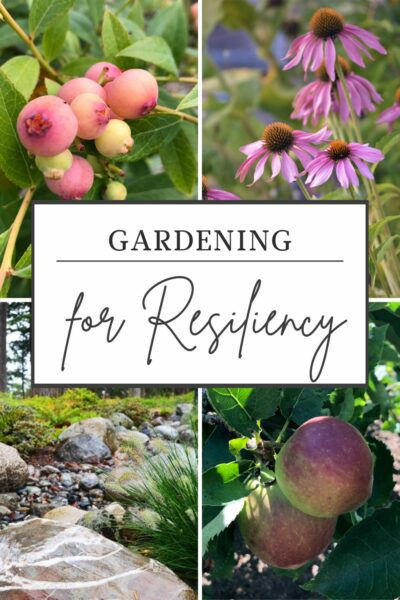
Let’s talk about Resiliency.
I know I am not the only one that is feeling a little unsettled with all that is going on these days. Regardless of your religious or political affiliation (two hot topics I steer clear of debating with people about), I think it is safe to say that with everything that is going on in the world right now, we are all feeling somewhat uneasy.
This makes sense then that the term Resiliency has been on my mind a lot. Maybe it’s been on yours too. So, how do we become more resilient?
Turn to your garden in challenging times
By definition, resiliency refers to the ability to adapt, recover, and bounce back from adversity, stress, or challenges. It is not about avoiding difficulties but about navigating them effectively and emerging stronger.
When I am feeling stressed, angry, frustrated or sad there is no better place for me to go than my garden. In difficult times our gardens provide us with a place to go to quiet all the noise, chaos, distractions, arguing, and bitterness.
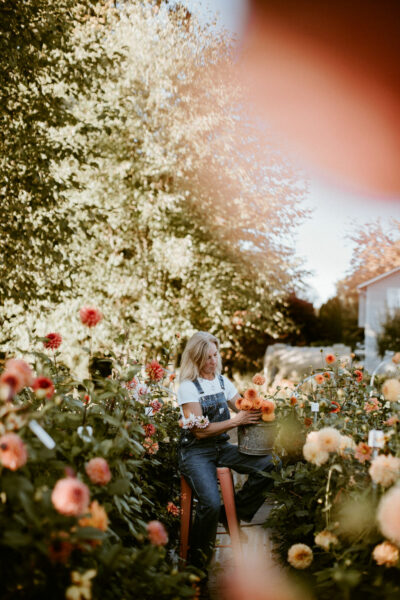
photo by Laura Ring Photography
Here are a few more ways your garden can help you become more resilient to life’s challenges and uncertainty:
Physical and Mental Health
- Being in nature reduces stress and anxiety, and improves your mood and overall well-being. Even if you don’t have a large space to garden, a spot in your home with indoor plants can provide a stress-relieving respite.
- Gardening can foster mindfulness and a sense of purpose. Like mediation, when I am gardening, ideas, solutions and answers just come to me.
- Our gardens give us feelings of gratitude and appreciation for the abundance that mother nature provides for us. A sense of gratitude helps to shift our focus from what we lack to what we already have.
- Exposure to microbes in the soil has been linked to improved immune function.
- Gardening is a great form of exercise that improves your physical health, and helps to build strength and stamina.
- Growing your own fruits and vegetables encourages healthier eating habits, as they are fresh, pesticide-free, and readily available.
- Spending time outdoors in the sun helps your body produce vitamin D, which is essential for bone health, immune function, and mood regulation.
Food Security and Self-Sufficiency
- Growing (even a small amount of) your own food reduces dependence on external supply chains, which can be disrupted during crises as we have seen.
- A garden with medicinal plants, like feverfew, echinacea, elderberry, calendula, comfrey, chamomile (to name just a few) can provide natural remedies from pain relief to immune support.
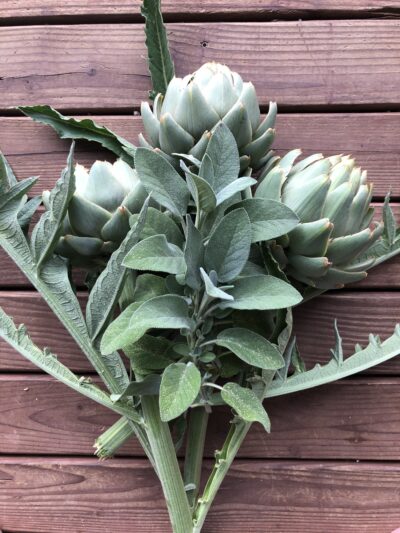
- Food forests and gardens with perennial vegetables like artichokes and asparagus, as well as berries and fruit trees can ensure future food availability for years to come.
- Saving seeds from your healthiest plants will ensure a supply of hardy, locally adapted varieties for the next season.
- Preserving food by drying, canning, or freezing your harvest allows you to create a stockpile in the event that our food supply is disrupted.
- Rain barrels and cisterns allow you to catch and store water should there be a drought or water contamination occurs.
- Planting “survival crops” like potatoes, beans, and squash, which store well and provide essential nutrients, will provide food for several months.
- Keeping a small flock of chickens will provide nutrient=dense eggs as well as manure that you can use to amend your soil.
- Starting a side-hustle, whether than be selling extra eggs, fruits, vegetables, or flowers (this list goes on and on…) can help to bring in additional income in challenging economic times.
Your Garden is a Teacher
- Gardening teaches patience, adaptability, and perseverance. Plants don’t always grow as planned, requiring you to adjust and problem-solve.
- Learning to grow a harvest from seed equips you with valuable skills to provide for yourself and others.
- Caring for a garden, especially ones that provide food or medicine, nurtures a sense of accomplishment and self-confidence.
Observing and attuning to nature’s natural systems will help you get answers and guidance with some of life’s most difficult challenges.
Community Gardening & Sharing
- Sharing excess produce with neighbors, or joining a community garden builds local food networks.
- Joining a local garden club helps us to learn from and share plants with each other, and build long-lasting friendships in the process.
- Trading seeds, plants, or knowledge with like-minded people increases our resilience together.
In essence, a garden is not just a source of food and beauty—it’s a foundation for developing our physical, mental, and communal strengths needed to navigate life’s challenges.
As we wrap up 2025, I wish you a healthy and prosperous coming year. I think we are in for some interesting times and certain challenges. If we can keep in mind that we are all connected, even though we may be operating from different perspectives, and work together to become more resilient we can and will get through it. You garden will be waiting and there to help you do just that.
All my best,
Heidi
Do you need help to create a garden that thrives?
I offer garden consultations where I will visit your property and help answer your question and address challenges you are having. I also offer plantscaping services where I will assess your actual site conditions (sun, shade, soil, space, challenges), and create a custom plant palette that will thrive in your specific reality. Every plant is selected by me, either directly from my nursery or from other nurseries that also source regionally appropriate varieties that I know perform well in Pacific Northwest conditions – including the difficult ones.
Interested in learning more? Visit Sublime Gardens to get in touch.




Leave A Comment