
I recently shared a post about Gardening for Resiliency, in which I talked about how your garden can help you become more resilient. In this follow-up post I want to talk about how you can help your garden become more resilient.
How to Make Your Garden More Resilient
If you’ve been gardening for any length of time in the Pacific Northwest, you already know that plans and gardens rarely cooperate perfectly. A late frost arrives just when the dahlias are waking up. A summer turns into a 90-day drought. A heavy rainstorm flattens your 5′ tall ornamental grasses to the ground. Resilience isn’t a quality you plant once — it’s something you build, season by season, through close observation, learning, making modifications, and a willingness to work with the land rather than impose your Pinterest-inspired expectations upon it.
That’s been the real lesson of 20+ years doing this work: the gardens that last, that truly thrive, are the ones designed to bend rather than break.
Start with what’s already there
Before you add anything, spend some time just watching and making observations. Where does water pool after a heavy rain? Which part of the garden stays dry even in November? Where does the sun sit in July versus February? These questions, and their answers, will mean the difference between planting something in hope and planting it with intention. Soil quality, drainage patterns, microclimates, light — understanding these conditions is the foundation everything else rests on.
I know it can feel like a delay when you’re eager to get growing. But a season of observation can unveil the kind of information that has saved me — and my clients — from countless expensive mistakes. Every garden I’ve worked in has had its own personality, its own challenges. Learning to work with that — not against it — is the whole practice.
Choose the right plant for the right place…at the right time
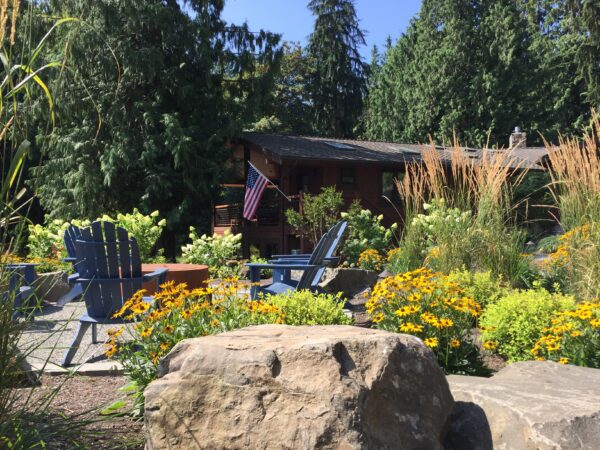
There’s no shortcut more powerful than planting the right plants in the right place. Native plants have spent thousands of years adapting to our wet winters and dry summers, our specific insects and birds and soil chemistry. They require less from you and give back more — to the ecosystem and to the garden’s overall stability.
Beyond natives, plants that thrive in climates with wet winters and hot and dry summers, like those from mediterranean regions, are your next best bet. Equally important to plant selection is plant diversity. Monocultures (yes, I’m looking at you, lawns) are fragile by design. When one species struggles, everything struggles. A garden with many species — layered, varied, interconnected — has built-in resiliency. If something fails, something else fills in. That’s resilience in its most literal form.
A note worth mentioning: timing matters as much as plant selection. Fall is ideal — the soil is still warm, giving roots time to establish before summer arrives. Spring is the next best option. If you must plant in summer, plan for consistent monitoring and regular watering until the plant is settled in.
Practices that build long-term strength
Resilient gardens are sustained by a few core habits:
Feed the soil, not just the plants. Compost, cover crops, and organic matter build the kind of soil that holds water when it’s dry, drains when it’s wet, and supports the microbial life plants depend on. Healthy soil is alive, and it rewards the investment.
Work with water, not against it. Notice where water naturally flows in your space and use it. Mulching, drip systems, and rainwater collection can all reduce your dependence on supplemental irrigation — and in a dry August, that matters.
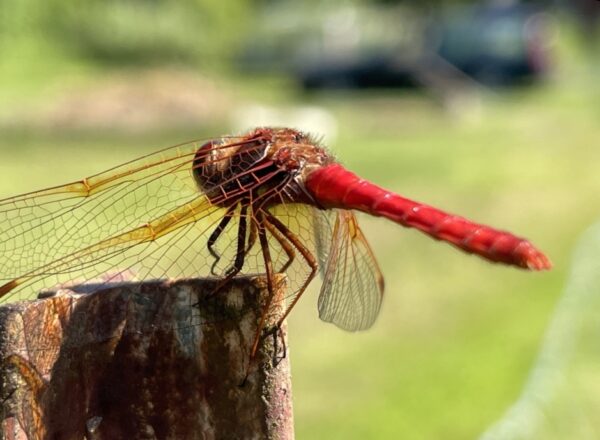
Let beneficial insects do the pest work. Synthetic insecticides don’t distinguish between the aphid you want gone and the predatory wasp that would have eaten it. Building habitat for birds, beneficial insects, and other garden allies creates the kind of natural balance that’s far more stable than chemical intervention.
Think about companions. Certain plants actively support each other — deterring pests, attracting pollinators, fixing nitrogen, providing shade. Companion planting is old knowledge, and it works. One of the oldest tricks in the book is planting alliums like chives or garlic with roses to deter aphids naturally. Nasturtiums planted nearby act as a trap crop, drawing aphids away from plants you actually want to protect.
Protect what you’ve planted. For longer-season growing or protection from our occasionally dramatic weather, consider a cold frame or a simple hoop house, windbreaks of shrubs or trees, shade cloth during heat spikes, or raised beds in areas with poor soil conditions. None of these have to be complicated or expensive — simple interventions compound over time.
Why it matters beyond your yard
A resilient garden isn’t just good for you — it’s genuinely good for the broader ecosystem. Native plantings support local wildlife. Composting keeps organic waste out of landfills and puts it back where it belongs. Gardens that require less intervention leave more room for natural systems to do what they do.
In a time when the climate is less predictable than it once was, each garden designed for adaptability contributes something real to the health of the wider landscape.
Creating a resilient garden is slower, more observational work than a lot of gardening content suggests. It asks you to get curious about your specific piece of land — its quirks, its tendencies, its wants. But in return, you get a garden that doesn’t just survive challenges; it gets stronger because of them.
Resilience flows both ways — you tend the garden, and the garden teaches and rewards you.
If you’d like personalized support building resilience into your space, I offer garden consultations drawing on 20+ years of experience as a Certified Professional Horticulturist and Landscape Designer Contact me for a consultation here





Leave A Comment